When the "Lemonade Stand" Runs Dry: South Gate’s Budget Reality vs. The Office
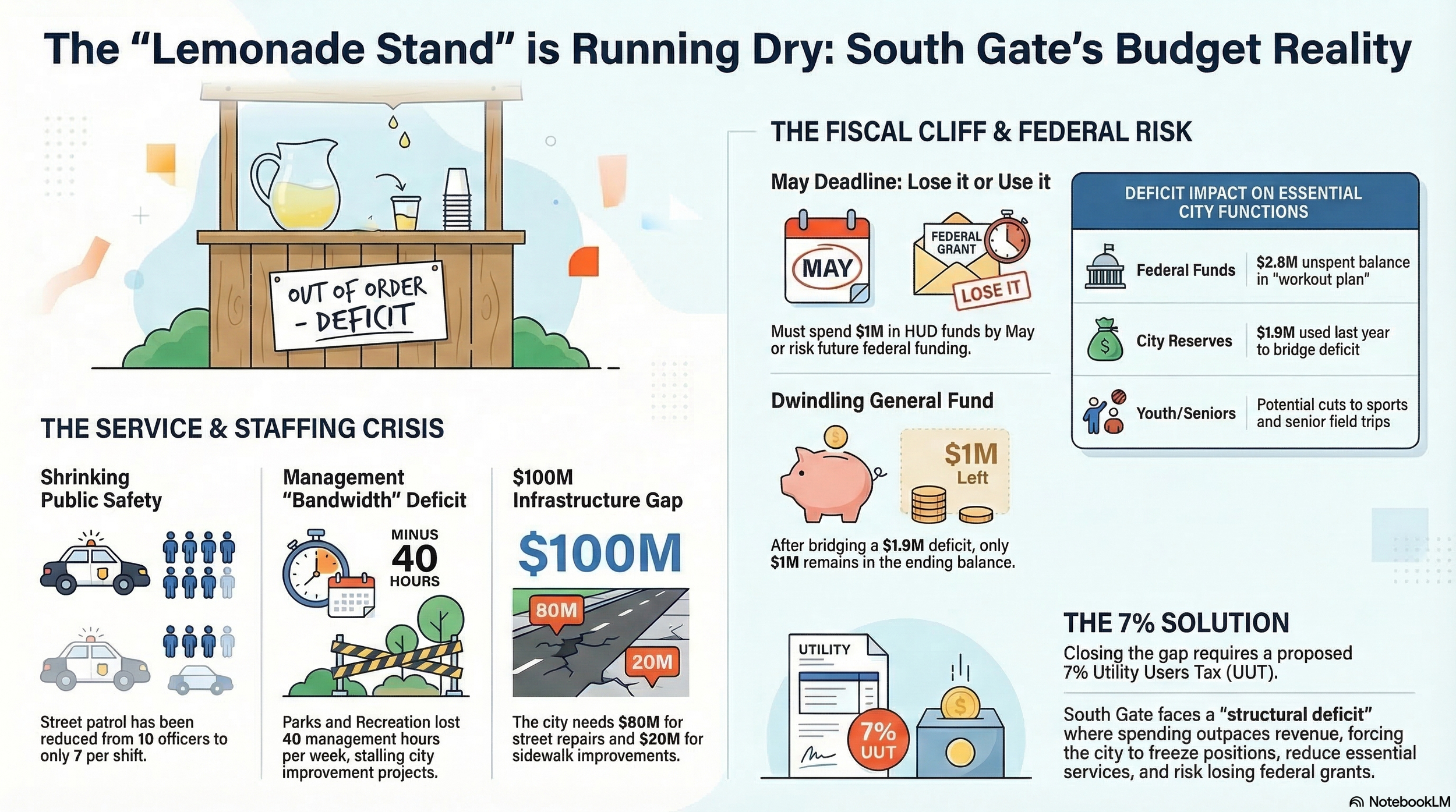
In the classic episode of The Office titled "The Surplus," Oscar Martinez has to explain a budget surplus to Michael Scott using a lemonade stand analogy. Michael, overwhelmed by financial jargon, famously asks Oscar to "explain it to me like I’m five." While Dunder Mifflin Scranton wrestled with the "problem" of having an extra $4,300 to spend on either new chairs or a copier, the City of South Gate is currently facing the inverse—and much harsher—reality of a structural deficit.
The Staffing "Bandwidth" Crisis
In Scranton, staffing stayed the same while they argued over furniture. In South Gate, the budget crisis is actively shrinking the workforce. The City is currently freezing positions to mitigate a deficit where expenditures are outpacing softening revenues.
The impact is most visible in Parks and Recreation, which is operating with only one director instead of both a director and a deputy director. This results in a loss of 40 hours of management capacity per week, leaving the department without the "bandwidth" to effectively oversee bidding, specs, and project management for city improvements. Similarly, the Police Department has been forced to reduce its street patrol from the usual 9 or 10 officers down to only 7 per shift to manage overtime costs.
Operational Hurdles: The HUD "Workout Plan"
One of the most complex operational challenges discussed in the March 10 meeting is the city's status with the Department of Housing and Urban Development (HUD). Unlike Michael Scott’s fear of losing a surplus, South Gate is struggling with "timeliness" issues regarding federal CDBG funds.
The city is currently in a "workout plan" with HUD because it has a balance of approximately $2.8 million that has not been spent quickly enough. If the city fails to spend over $1 million by a May deadline, it risks losing future federal funding. This creates a paradoxical operational stressor: the city must "jump through hoops" to spend money on infrastructure like streets and sidewalks while lacking the engineering staff to design and bid the projects within a tight three-month window.
The Contrast: Chairs vs. Essential Services
While Oscar explained to Michael that a surplus must be spent or lost, South Gate officials are explaining to residents that essential services are on the line. The city bridged a 1.9 million operational deficit last year using reserves, leaving the general fund with a projected ending balance of only∗∗1 million.
The debate in South Gate isn't about office luxuries; it’s about:
80 million needed for street repairs and20 million for sidewalks.
The potential elimination of crossing guard positions.
Reductions in youth sports programming and senior center field trips.
A Breakdown in Decorum
Finally, much like the chaotic "surplus" meeting where the Dunder Mifflin staff split into factions, the South Gate Council has seen a troubling decline in decorum. Residents and council members highlighted instances of profanity, personal attacks on family members, and "public shaming" during meetings.
In The Office, the conflict was resolved with a trip to Burlington Coat Factory. In South Gate, the solution is much more difficult, requiring a 7% Utility Users Tax (UUT) and deep "drastic cuts" to city services to keep the "lemonade stand" from closing its doors entirely. What do you think, where do you see this all going down?